At Firefly London, we believe in sharing knowledge, experiences and inspiration. Our Blog & Resources page is a space where families, individuals and professionals can stay connected with our work, access important information, and explore ideas that support learning, well-being and community.

Our blog is regularly updated with articles, reflections and stories from our community. Through these posts, we aim to:
• Share insights on supporting neurodiverse children and adults
• Explore the benefits of inclusive therapy and alternative education
• Provide tips and resources for home education and family support
• Celebrate milestones and achievements within our community
• Offer updates on upcoming events, workshops and activities
We want our blog to be an uplifting and practical space that helps families feel supported and inspired as they navigate their journeys.

As we step into autumn, we’ve been moving from space to earth — grounding our learning in the changing season. [...]
When people ask how Firefly began, I often smile — because it really started as a vision.
A vision to create a world for myself, my family, and the families I work with.
[...]
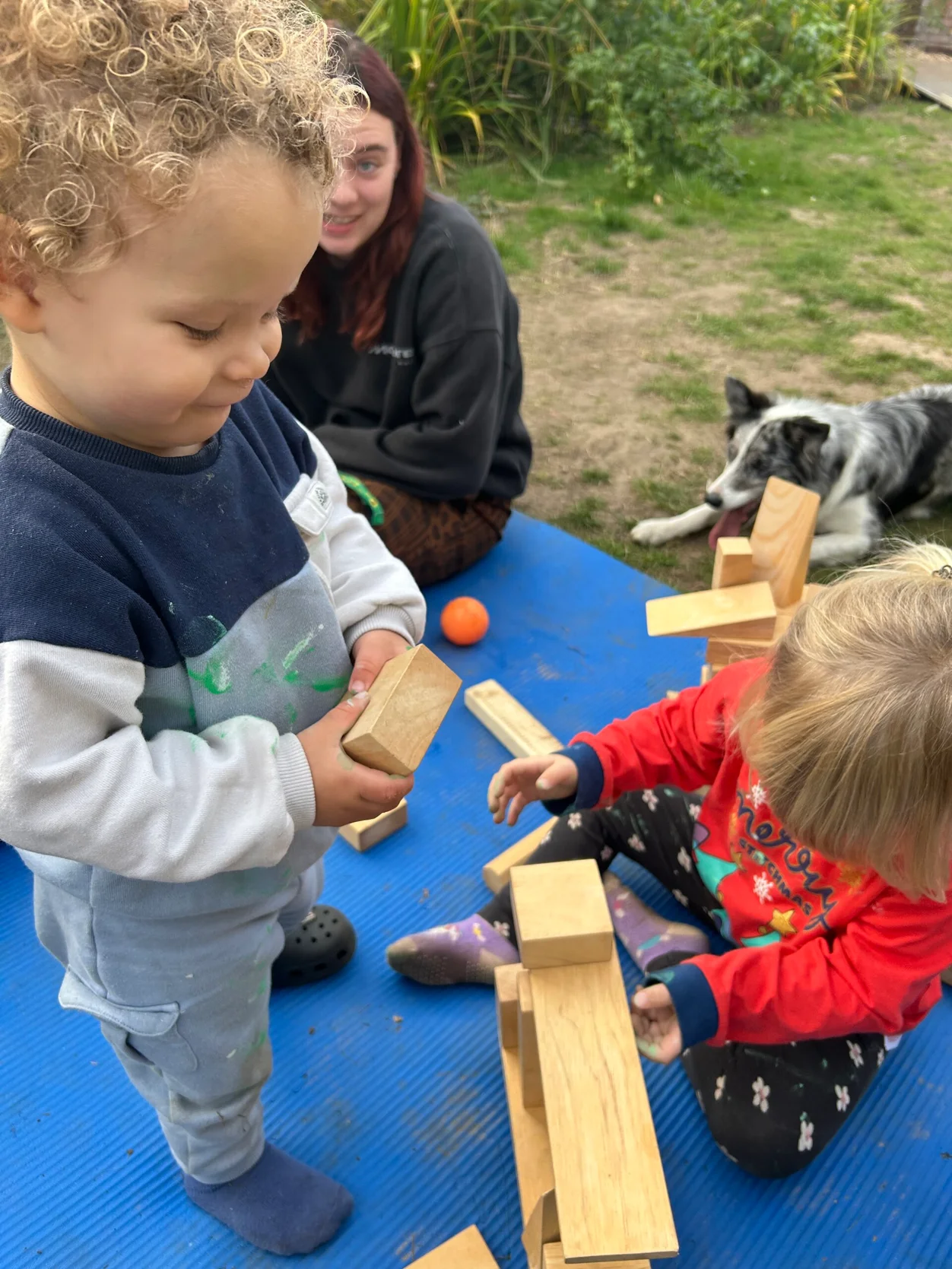
Parenting is so often about being with, sitting alongside [...]

Where therapy, education and belonging meet [...]

Our Frame Running Club began in 2018 and is still going strong. [...]
Alongside our blog, we provide a growing collection of resources to guide and support families, carers, and professionals. These resources include:
• Policies and safeguarding information – ensuring transparency and safety in everything we do.
• Handbooks and guides – offering practical advice on how to access and make the most of our services.
• Learning materials and toolkits – designed to support inclusive education and development.
• Community information – details of local support networks, partnerships and opportunities.
Our resources are designed to be clear, accessible and easy to use, offering reassurance and guidance whenever it is needed.
We know that many families face persistent barriers to accessing the information and support they need. Our Blog & Resources page is here to help remove those barriers by providing reliable, inclusive and practical content that can make a real difference.
By sharing knowledge and creating a central hub for information, we hope to empower our community to feel confident, supported and connected.

We invite you to explore our blog, download resources, and check back often for updates. Together, we can continue building a world where every individual has the opportunity to learn, grow and shine.

As we step into autumn, we’ve been moving from space to earth — grounding our learning in the changing season.
As part of our Autumn Seeds and Planting project, the children were invited to imagine themselves as deciduous trees, noticing what might be ready to fall away.
They explored the idea of release — the feelings, habits, memories, or connections that no longer served them and could now return to the earth.
Some wrote poems or songs.
Others made leaf rubbings, writing their words of release onto each one.
Then came the letting go — leaves dropped from branches, or gently scrunched and placed down, each movement an act of choice.
Before that, they explored colour.
Each child chose a shade that matched how they felt about letting go.
For some, the colours were bright and joyful — the excitement of opening space.
For others, they were deeper or softer — the tenderness and uncertainty of release.
Every colour belonged.
And perhaps, in moments like this, we can notice our own patterns too — the places where we hold tightly to process, shape, and vision, and the quiet wish to let things grow freely beyond our reach.
Nature reminds us that these are not opposites.
Before a deciduous tree lets go of its leaves, it draws back what still nourishes it — the chlorophyll, the energy, the water that will sustain it through winter. It holds what serves and releases what’s ready.
Maybe we can, too.
Maybe there is space to hold both — the steadiness of care and the courage to release.
To notice the wish to control and the desire to let go, and to see how they might coexist, even feed one another.
To find a rhythm that allows both the tending and the trusting.
Both
We do not need to choose.
We can be the branch that holds
and the breeze that releases.
We can gather what still feeds us
and let fall what is finished.
Even endings make the soil richer.
Even letting go is a way of tending.
When people ask how Firefly began, I often smile — because it really started as a vision.
A vision to create a world for myself, my family, and the families I work with.
A world where learning, care, and therapy aren’t separate things,
but part of one whole — where children can grow in their own rhythm,
and adults can grow alongside them.
I actually remember drawing it all out on a big piece of A3 paper about eight or nine years ago — circles connecting therapy, education, family, and community.
Even then, I knew it would happen one day. I didn’t know how or when, but I did know it would happen.
For our family, it started small. Marcus cared for our boys from when they were little, and together we made the choice to home-educate them.
This year, our eldest — Jack — chose to go to school at 14 to do his GCSEs. Watching him step into that with confidence, comfortable in who he is, has meant so much to us.
Harry, our middle one, has really come alive here.
Before Firefly, homeschooling could feel a bit lonely at times, and now he has friends, connection, and space to explore.
And Luna — she’s growing up right here in the heart of it.
She knows she belongs, and that’s such a blessing.
Firefly has become a place where learning, care, and therapy meet.
Where growth is supported — for children, families, and our team — in a balance between support and challenge.
That balance is everything.
We train our team not just in what to do, but how to be — how to sit alongside children, co-regulate,
and express our feelings and needs before we teach or challenge.
It’s about finding that sweet spot where support and challenge meet —
so everyone can grow at their own pace, in the direction that’s right for them.
And just like the children, Firefly itself is growing in its own rhythm —
unconventionally, but true to its nature. We moved in on a Saturday and opened our doors on the Monday.
The administrative paperwork and structure have been finding their place in their own time,
and Sociocracy is becoming embedded gradually — as it’s lived, not just written.
In every aspect, we’re honouring the philosophy that guides everything we do:
that each part of Firefly — whether it’s a child, a team, or the organisation itself —
develops at the pace and in the direction that’s aligned for it in that moment.
Firefly isn’t just a project.
It’s a living, breathing example of what can happen when care, learning, and belonging come together —
when we dare to build the kind of world we wished existed for our own family, and then share it with others.
Firefly is truly and completely aligned with my higher purpose — from every perspective.
Here, I sit in perfect balance between support and challenge,
and I feel deeply blessed and grateful to everyone who finds us and feels drawn to the Firefly community.
Written by Ellie — walking the path of Firefly with gratitude, balance, and trust in the rhythm of what’s still becoming.
Parenting is so often about being with, sitting alongside ...
Would you believe me if I said parenting is an opportunity to exercise the be-ing muscles rather than the do-ing muscles?
If we think of strengthening being about building strength in synergies we don't use so much. Rather than doing more of what we can already do.
Of course life always demands the do-ers to do, washing, tidying, planning, organising, cooking. We will always need to manage these tasks.
What I have found, over and over as a parent, of a toddler (again) and a teenager- for the first time! (and as therapist over and over) is that life can miraculously handle all kinds of challenges when I get out of the way.
When I stop trying to manage and control everything, even the most complex problems can be solved with very little effort and sometimes no effort at all.
Life has repeatedly proven time and again to trust within me the wisdom of a higher plan. I just need to remember…
I’ve also realised that my “beingness” is a magnet for beauty, intimate encounters with strangers, vulnerable moments with those I love, and an ability to make a difference in the lives of others by offering less instead of more. Who knew doing so little could result in finding a way to make a contribution steeped in wisdom and experience rather than reactivity and history?
Where therapy, education and belonging meet
It’s a bright morning in the garden.
A small group of children gather around the water table, watching the light dance across the surface. One child stirs gently with a wooden spoon; another tips in a cup of leaves and laughs as they swirl. There’s no rush, no noise to rise above — just curiosity, rhythm, and connection.
This is what a Firefly morning feels like. It looks simple, even ordinary — but it’s built on years of research and lived experience in child development, therapy and inclusive education.
The heart of The Firefly Way
At Firefly, we believe every child has a natural drive to grow, learn and connect — and that our role as adults is to create the right conditions for that growth to unfold.
The Firefly Way is our integrated model of therapy, education and community.
It’s shaped by three principles:
1. Regulation comes before learning.
A child’s nervous system needs safety and balance before it can take in new experiences. (Siegel, 2012; Porges, 2011)
2. Relationships are the foundation of development.
Progress happens in connection — not isolation. (Tronick, 2007; Perry, 2021)
3. Environment matters.
Nature, rhythm, and sensory balance allow every child to find their own pace. (White, 2019; Louv, 2008)
These ideas shape everything we do — from the way sessions are structured to the way adults interact, observe, and support each other.
Holding space for self-discovery
At Firefly, we hold space for children to explore, problem-solve and make sense of their own experiences.
We provide rich environments that offer equal measures of challenge and support, trusting that curiosity and movement guide real learning.
A key part of this is nurturing interoception — the inner awareness of one’s own body and state. When children begin to notice their heartbeat, hunger, tiredness, or calm, they start to build the internal map that underpins self-regulation, emotional literacy and independence.
Our role is not to direct but to attune: to offer safety, stillness, and presence so children can discover these signals for themselves.
A rhythm of learning and rest
Our days flow through movement, stillness, exploration and reflection. There’s time for curiosity and laughter, and equal time for quiet focus.
Children might begin with movement and exploration, followed by time for stillness — drawing, listening, noticing their breath. Then we gather again to share, tell stories, or simply be together.
Sometimes, moments of stillness arise spontaneously.
One morning, a child who is rarely still paused at the doorway of the lodge, drawn by the sound of singing bowls. Inside, Ananda — our yoga and sound therapist — was offering a sound bath to one of our facilitators resting on the floor. The child watched quietly for a while, noticing Ananda’s welcoming smile when their eyes met. Then, without words, he entered the space, lay down, and joined the sound bath — simply being, listening, and resting in the shared calm.
These moments remind us that stillness can’t be taught — it emerges when the environment feels safe enough to allow it.
We also protect time in each day for children to have one-to-one time with therapists. These moments are not about performance or success, but about gently developing the foundation skills that support function and learning — balance, coordination, communication, interoception, and self-regulation.
When these skills grow outside the pressure to “get it right,” children build the confidence and internal safety that make all other learning possible.
This rhythm — between shared experience and quiet focus, between self-directed exploration and guided practice — mirrors the nervous system’s natural cycles of activation and rest, supporting calm attention, confidence and trust.
A moment in practice
During a recent session, one of our children who moves with full physical support from an adult partner chose to take part in a creative maths and storytelling activity. They communicated choices through eye-pointing — looking up for “yes” and directing the story with gaze and gentle vocalisations.
At times, they reached out to explore ingredients and props with their hands, adjusting posture and movement with remarkable awareness. Together, therapist and child explored counting, comparing quantities, planting, and the principles of growth — all within the flow of a story they co-created.
The therapist stayed physically still and deeply attentive — using her body only to ensure safety, while allowing full choice in how the child moved and interacted. Towards the end, the child recognised their own tiredness, returned to their chair, and found calm again within moments.
In that single session, there was mathematics, language, movement, emotional regulation — all woven through connection, trust, and choice.
This is The Firefly Way in action.
Moving beyond traditional models
Much of the research that informs The Firefly Way highlights a vital shift — away from traditional early-intervention models that focus on pushing for rapid progress in the early years, often leading to an apparent “plateau” or even decline later on.
At Firefly, we intentionally take a different path.
We focus on foundations for sustainable growth and development — nurturing the underlying systems of regulation, balance, curiosity and interoception that will serve each child well into adulthood.
This approach recognises that growth is not a race to catch up, but a lifelong unfolding. By honouring each child’s natural pace and supporting their nervous system to integrate skills deeply, we create the conditions for authentic, lasting progress.
Roots and influences
The Firefly Way is grounded in research and informed by a range of approaches that share a deep respect for the child’s intrinsic motivation and need for connection.
We draw inspiration from The Curiosity Approach, an early-years framework that celebrates exploration, wonder and child-led discovery. It reflects our belief that play, movement and meaningful experiences are at the heart of learning.
From MAES Therapy, we carry the understanding that the brain develops through active experience — and that therapy should focus on the foundations that make learning and function possible. It reminds us that development is not about completing specific tasks, but about supporting the underlying systems of movement, attention, perception and motivation so that meaningful, integrated skills can emerge.
Verve Therapy deepens our understanding of connection through reflective video practice. It helps us quiet the external “shoulds” about how we think we ought to teach or support, and instead focus on our intuitive, attuned connection with the child in front of us. Through slowing down and truly seeing what is already working, we learn to meet children with greater presence and empathy.
And Nonviolent Communication (NVC) guides the way we listen, speak and collaborate — reminding us that all behaviour is communication, and that empathy creates the safety from which growth naturally follows.
These influences weave together to form a living practice — one that values presence over performance, connection over correction, and curiosity as the heart of growth.
A community approach
The Firefly Way extends beyond the children.
Parents, therapists, facilitators, and educators learn together — exploring not just what the children need, but what we need as adults to stay grounded and connected.
When parents learn to notice their own state — to breathe, soften, pause — it creates a ripple effect. Children feel it. The room feels it. The whole community shifts.
Research now confirms what many of us have long felt intuitively: co-regulation — the process by which calm, attuned adults help children find balance — is one of the most powerful drivers of development and emotional health (Hofer, 2006; Shanker, 2016).
Firefly is a not-for-profit Company Limited by Guarantee (CLG), guided by the principles of Sociocracy.
This means decisions are made through consent, roles are distributed clearly and fairly, and every voice has a place in shaping the direction of our work.
Our organisational structure mirrors our practice with children — collaborative, transparent, and grounded in trust.
Why this matters
For some children, traditional settings are too fast, too loud, or too narrow to meet their needs. They need environments that recognise how movement, rhythm, interoception and sensory experience are not extras — they’re the language of growth.
The Firefly Way honours that. It offers a model where children of all abilities and support needs can play side by side, learning from and with each other — where therapists, facilitators, educators and families work as one team, and where belonging is not a slogan — it’s a daily practice.
At Firefly, access extends far beyond the physical. We look at what it means to belong in every sense — emotionally, socially, and financially. We invite families and team members to share their time, energy and skills, knowing that true community is built on contribution and mutual care. Skill-shares, creative exchanges and shared learning are all part of how we grow together.
When children feel safe and seen, their potential unfolds naturally.
When parents feel supported, they rediscover the joy in parenting.
And when communities work this way, belonging stops being an aspiration — it becomes reality.